

The practice of rape and girls’ defilement in Kenya is so common it can be described as an epidemic. Every 30 minutes a girl/woman is raped in the country. Studies have revealed that as many as 68% of school‐aged children have experienced sex under coercive conditions, that roughly 165 children are ‘defiled’ every month, and that defilement incidents continue to be on the rise. The perpetrators include family members and community members, some of whom are guided by the misconception that having sex with a virgin is a cure for HIV/AIDS. In reality, the epidemic of girl child rape leaves these young girls at increased risk of contracting HIV/AIDS themselves. Despite the stiff criminal law penalties against defilement (the term used in the Kenyan Sexual Offences Act to refer to the rape of girls under 18), the law is not adequately being enforced. As a general pattern, police fail to conduct adequate criminal investigations into these crimes, resulting in a culture of impunity which only serves to perpetuate this violence.
The equality effect commenced the 160 Girls – Kenya project in 2011 working with the Kenyan‐based children’s rights organization, Ripples International. Ripples operates the Brenda Boone Tumaini Girls’ Rescue Centre, a shelter in Meru, Kenya that provides care and support for defilement victims. At the time this project was launched, the Centre had sheltered over 160 defilement victims, between the ages of 3‐17 years of age, who needed access to justice. That figure continues to rise by the week. The aim of the “160 Girls” project is to hold the police and the Kenyan state accountable for the enforcement of defilement laws and thereby meet their duty to protect girls in Kenya from this most appalling form of violence. The equality effect’s 160 Girls project team, includes lawyers, academics, and activists from Canada, Ghana, Kenya and Malawi, considered various options for addressing the widespread police failure in the handling of defilement cases. A team of legal volunteers from around the world assisted in the legal research in support of the case (all of the lawyers working to support the “160 Girls” case volunteer their time). Ultimately it was decided that a constitutional petition would be brought against the State, arguing that its failure to enforce the laws meant to protect girls from rape amounted to a violation of their constitutional human rights. This avenue was seen as the strategy with the most potential for widespread, systemic impact.
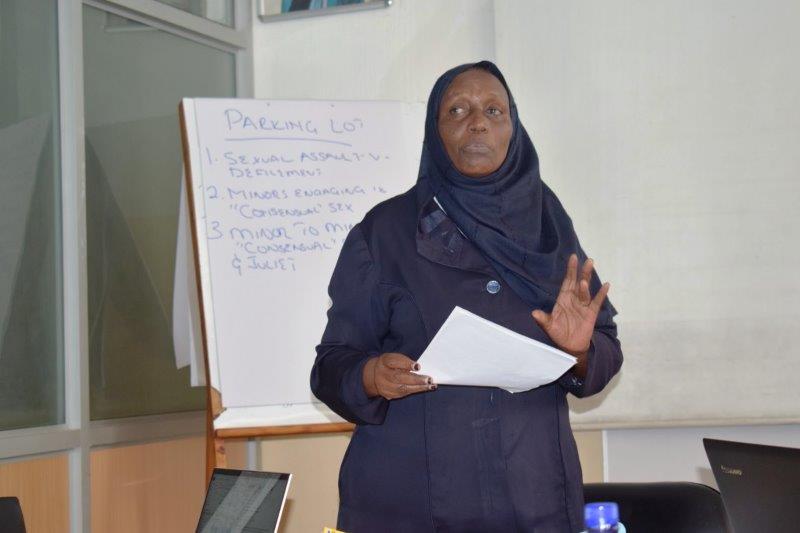
The overall objective is to monitor police treatment of defilement cases reported at the Gender-Based Violence Recovery Center (GBVRC) based at Coast Provincial General Hospital (CPGH) –Mombasa, through a standard `intake and monitoring’ form. The activities for the project are: Recruiting, monitoring and documenting police treatment of defilement claims of survivors attended to at the CPGH-GBVRC, divide the intake forms into the specific police stations under which every defilement claim had been reported and make interactive phone calls to the guardians of the survivors to get updates on the progress of each claim documented in the intake form at the GBVRC. ICRHK implemented 160 Girls project which conducted public legal education in primary schools and the community in sub-counties of Mombasa County with support from equality effect. With an aim to raise community awareness that, pursuant to the Order of the High Court of Kenya in the “160 Girls” case, police must conduct “prompt, effective, proper and professional” (PEPP) investigations into defilement cases and bring all perpetrators of defilement to justice. The community education program focus was legal educational empowerment and establishing a partnership between community members and police and civil society. The school workshops have been conducted using the “Girls for Justice” training program used to promote children’s awareness of the“160 Girls” decision, their equality rights, and duties owed to them by police and their community—empowering them to help girls stand up against defilement, report defilement and be agents of change in their communities. The focus is to equip girls with increased knowledge and voice to bring greater community attention to defilement, provide a stronger check on police and community actions that are harmful to girls, and ultimately serve to make girls safer in their communities.
