

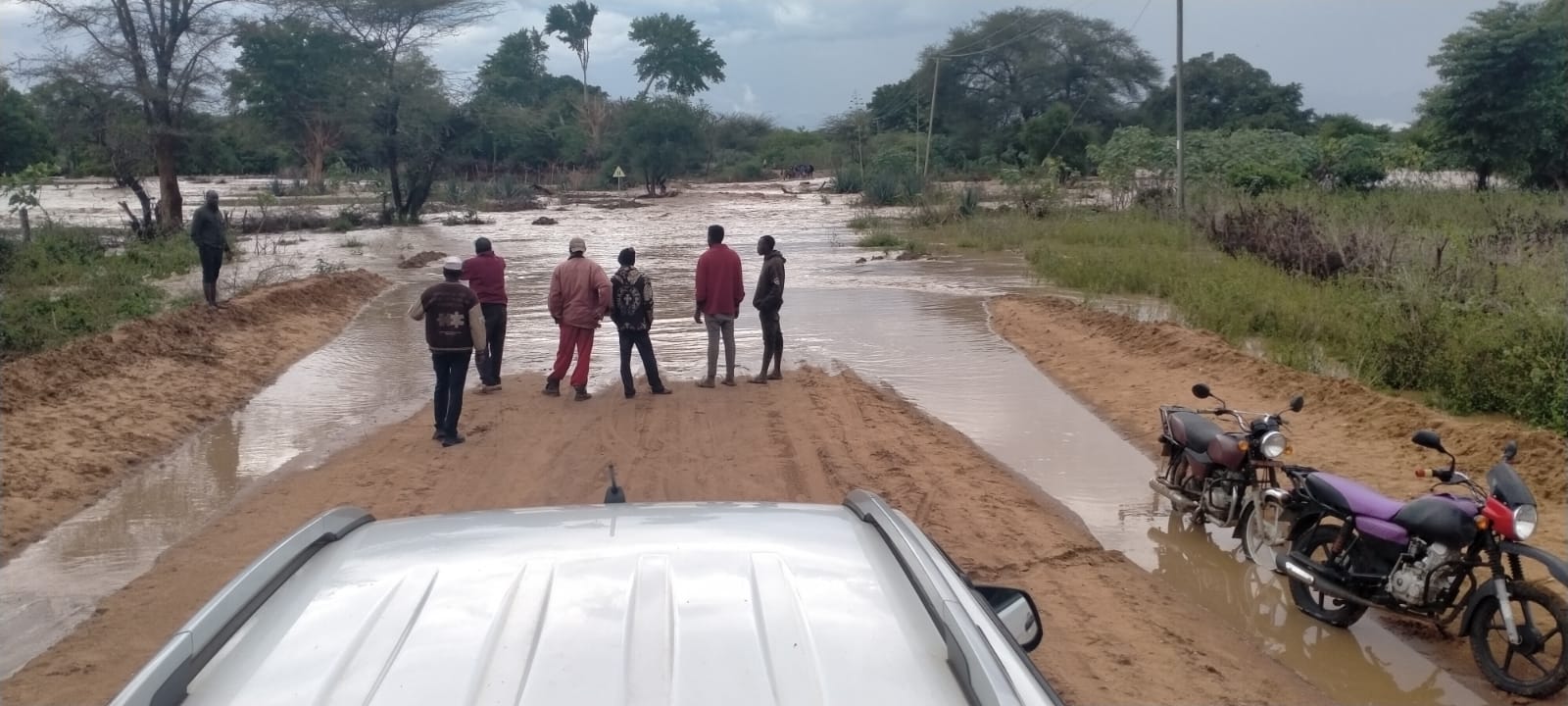
At the International Centre for Reproductive Health Kenya (ICRHK), we are dedicated to advancing reproductive health through comprehensive data collection and research. One of our flagship initiatives, the PMA Agile project, recently undertook a significant task: mapping and listing activities for the Women’s Survey in West Pokot and Bungoma Counties. Despite facing considerable challenges, including heavy rains and treacherous roads, the team successfully completed these crucial activities, demonstrating resilience and determination.
Navigating Adversity: The Journey in West Pokot and Bungoma
The enumeration areas in West Pokot County presented unique logistical challenges. The areas are widely dispersed, and the onset of heavy rains made many roads impassable. Rivers swollen by the downpours created additional hurdles, making travel difficult and time-consuming. At one point, our teams had to wait up to nine hours to cross a particularly swollen river.
In Bungoma County, similar conditions prevailed. The bad roads, exacerbated by the heavy rains, tested the team’s resolve and required innovative problem-solving and a steadfast commitment to the project’s goals.
Team Resilience and Community Support
The success of the mapping and listing activities in these counties is a testament to the resilience of our team and the invaluable support of the local communities. Our central team, alongside the resident enumerators, displayed exceptional perseverance in the face of adversity. The involvement of village elders was crucial; their local knowledge and support were instrumental in navigating the challenging terrain and ensuring that all enumeration areas were accurately mapped and listed.
Collaborative Efforts and Stakeholder Engagement
The successful completion of these activities would not have been possible without the collaboration and support of key stakeholders. The West Pokot and Bungoma County administrations, Johns Hopkins University (JHU), and the Kenya National Bureau of Statistics (KNBS) all played significant roles in facilitating the project. Their commitment to the PMA Agile project’s objectives and their support in overcoming logistical challenges were vital to our success.
Moving Forward: Data for Impact
With the mapping and listing activities now complete, we are poised to move forward with the Women’s Survey. The data collected will provide critical insights into reproductive health needs and challenges faced by women in West Pokot and Bungoma Counties. This information will be instrumental in shaping policies and interventions aimed at improving reproductive health outcomes in these regions.
The PMA Agile project continues to demonstrate the importance of resilience, community engagement, and collaborative efforts in achieving its goals. We extend our heartfelt thanks to everyone involved in this endeavor, from our dedicated team members to the supportive village elders and key stakeholders. Together, we are making significant strides in advancing reproductive health and empowering communities with the data they need to drive meaningful change
