

In the picturesque coastal county of Kilifi, Kenya, behind the stunning beaches and rolling waves, lies an often-overlooked health crisis. Every day, young female sex workers (YFSWs) and young transgender persons (YTGs) navigate a complex landscape of stigma, discrimination, and structural barriers in their pursuit of healthcare services. For these marginalized groups, accessing sexual and reproductive health (SRH) services is not merely challenging—it is a fight for survival.
Recent baseline surveys conducted by the International Centre for Reproductive Health Kenya (ICRHK) shed light on the challenges and opportunities to improve the sexual and reproductive health (SRH) outcomes for these groups. These populations, otherwise known as key populations, are among the most vulnerable to HIV and sexually transmitted infections (STIs) in Kenya. Recent studies reveal that 33 percent of all new HIV infections in Kenya occur among key populations, with more than half of these new infections affecting individuals aged 15–24 years. In Kilifi County, where 19 percent of people living with HIV fall into this same age group, the need for targeted interventions is both urgent and undeniable.
Understanding the Landscape
Kilifi County, with its 2.8% HIV prevalence, is home to over 6,600 female sex workers, 4,589 men who have sex with men (MSM), and 342 transgender persons. While the national prevalence of HIV is 3.7%, the burden is disproportionately borne by young people aged 15–24, who make up 19% of people living with HIV in the region.
The vulnerabilities of YFSWs and YTGs are compounded by structural, social, and behavioral factors. YFSWs frequently report early sexual debut, averaging 16 years, and multiple sexual partners, with many engaging in sex work as a survival strategy due to poverty. This reality is stark: 58.9% of YFSWs reported using condoms during their last sexual encounter, while 11.1% reported no use of any HIV prevention methods.
YTGs face distinct challenges, including harassment, stigma, and inadequate access to gender-affirming care. The lack of healthcare providers trained in transgender health means many YTGs must rely on informal channels for information and services, leaving them vulnerable to misinformation and neglect.
The Lives Behind the Statistics
Behind every statistic is a young person, each with their own unique story. For many YFSW, the path to sex work begins early, often in their teenage years. The average age of sexual debut among this group is just 16 years, and many report engaging with multiple partners, often under conditions that limit their ability to negotiate safer practices. According to survey findings, while 91 percent of YFSWs reported using condoms as their primary prevention method, only 58.9 percent consistently used them during their most recent sexual encounters. Factors such as trust in partners, influence of alcohol, and financial desperation often lead to risky behaviors.
For young transgender persons, the situation is no less challenging. These individuals face dual marginalization—both for their gender identity and their health vulnerabilities. Many transgender persons avoid healthcare facilities altogether, fearing the discrimination they are likely to encounter. One participant in the study shared a heartbreaking experience, describing how police officers mocked their gender identity instead of addressing their concerns when they reported a case of violence. Such systemic harassment discourages individuals from seeking critical healthcare, exacerbating their vulnerabilities to HIV and other health risks.
Barriers to Accessing SRH Services
Stigma and Discrimination
Fear of judgment is one of the most significant barriers to healthcare access for both YFSWs and YTGs. For many YFSW, the fear of being judged or identified as a sex worker discourages them from seeking essential SRH services. Around 12.7% of YFSWs surveyed reported experiencing discrimination when seeking services, and many avoided public facilities altogether to prevent exposure to stigma. As one respondent noted, “When I go to a public clinic, I am afraid people will know what I do. They will judge me before I even speak.”
For YTGs, the situation is often worse. Many report harassment from both law enforcement and healthcare providers. One transgender respondent recounted being asked intrusive and humiliating questions by healthcare providers, such as, “Are you a woman or a man?” These encounters not only deter individuals from seeking care but also deepen the sense of alienation and invisibility felt by many within the transgender community. Another transgender respondent shared: “When you report an issue to the police, they ask, ‘Are you a woman or a man?’ instead of addressing the complaint.” This transphobia discourages many YTGs from seeking the care they need, even when facing life-threatening health concerns.
The Practical Barriers to Care
In addition to stigma, practical barriers compound the challenges faced by these populations. Stockouts of essential SRH supplies such as condoms, Pre-Exposure Prophylaxis (PrEP), and Post-Exposure Prophylaxis (PEP) are a frequent occurrence in many healthcare facilities. For individuals with limited financial resources, these shortages can be life-threatening. One young sex worker described a common dilemma: “When I come to the facility to get STI treatment and there is no medication, I have to choose between buying the medicine or buying food. Most times, food wins.”
Accessibility issues extend beyond stockouts. Many facilities are located far from where key populations live or work, and long waiting times deter those who need quick, discreet services. This is where Drop-In Centers (DICs) have become a lifeline. These centers provide safe, stigma-free environments where individuals can access SRH services without stigma or discrimination. According to the surveys, 71.8 percent of YFSWs in Kilifi reported using DICs as their primary healthcare access point. However, the limited number of these centers means that not everyone can benefit from their services.
For young transgender persons, the gaps are even wider. Gender-affirming care, such as hormone replacement therapy or gender-affirming surgeries, is unavailable in most public healthcare facilities. Without these critical services, transgender individuals are left feeling ignored and underserved by the very systems meant to protect their health.
Inaccessible and Unfriendly Services
Healthcare services in Kilifi are often described as inaccessible, either due to long distances, long wait times, or stockouts of essential supplies like condoms, PrEP, and PEP. While Drop-In Centers (DICs) provide a safe haven for many, their limited number means they cannot serve everyone in need. For YFSWs, inconsistency in commodity availability poses a significant barrier.
Legal and Policy Challenges
Kenya’s restrictive policies further exacerbate access challenges. Adolescents under 18 require parental consent to access family planning and HIV prevention services, leaving many young people, including underage sex workers, without the protection they need. Similarly, the lack of gender-affirming services for YTGs underscores systemic neglect of their unique healthcare needs.
Insights from the Surveys
The surveys revealed that 71% of YFSWs in Kilifi are aged 20–24, with 54.9% reporting being single and 32.4% having children, often starting motherhood as teenagers. Among young female sex workers, 96 percent were aware of HIV and STI prevention methods. Despite their vulnerabilities, 91% of YFSWs reported using condoms as a primary prevention method, while 75% relied on PrEP. However, inconsistent use remains a challenge, driven by factors like trust in partners, the influence of alcohol, and perceived reduced risk due to PrEP. Alcohol consumption during sexual encounters was identified as a major risk factor, with 40 percent of those who had consumed alcohol reporting that they did not use condoms.
Similarly, while YTGs expressed a willingness to seek care, many cited fears of discrimination and inadequate services tailored to their needs. Digital platforms such as TikTok and Instagram emerged as key channels for SRH information among YTGs, offering a glimpse into the potential of innovative outreach strategies. This reliance on social media underscores the need for innovative, youth-friendly outreach strategies.
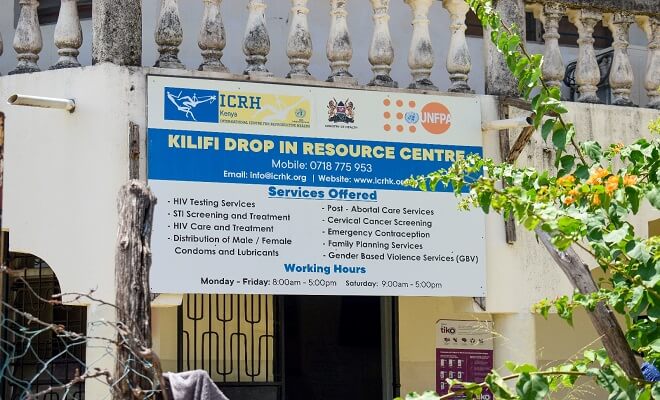
The Kilifi Drop-in Center(DIC) have become a lifeline for YFSWs and YTGs in Kilifi. These center provides a stigma-free environment where young people can access services like HIV testing, PrEP initiation, and STI screening. Around 71.8% of YFSWs identified DICs as their primary healthcare access point, emphasizing their critical role in reducing barriers.
Moving Forward
The path to equitable healthcare for young female sex workers and transgender persons in Kilifi County is fraught with challenges but also brimming with opportunities. The resilience of these young key populations, coupled with the dedication of organizations like ICRHK, offers hope for a brighter future.
We have the data, the insights, and the tools to make a difference. By expanding access to youth-friendly services, tackling stigma, and advocating for systemic reforms, we can create a future where no one is left behind. Young key populations deserve nothing less.
We are moving beyond words and taking action, ensuring that Kilifi County becomes a model of inclusive, compassionate healthcare for all.
