

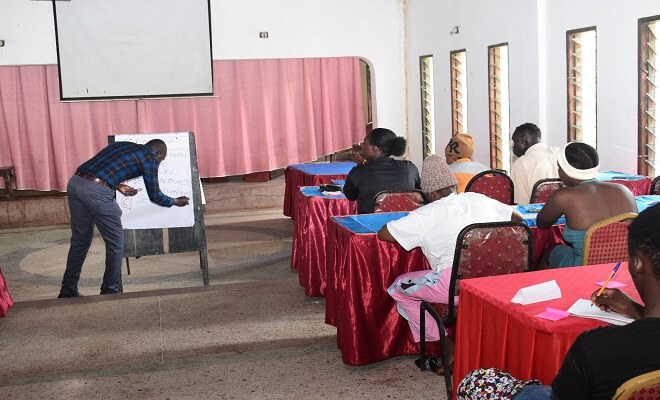
Imagine walking into a room where individuals from some of the most marginalized communities, young transgender (YTG) persons, and young female sex workers (YFSW) are coming together to learn, grow, and become leaders within their networks. Peer education is a transformative approach that leverages shared experiences to inspire positive change. It involves equipping individuals with the knowledge and skills needed to educate and support their peers on issues such as health, safety, and human rights. This approach is particularly effective for addressing the unique challenges faced by vulnerable populations, as it builds on trust and lived realities.
Recently, two training programs held in Kilifi, Kenya, organized by the International Center for Reproductive Health (ICRHK) and the National AIDS and STI Control Programme (NASCOP), highlighted the potential of peer education in bringing about real change. These programs focused on empowering transgender individuals and young female sex workers (YFSW) by addressing their specific vulnerabilities. The impact of these training programs extended far beyond the sessions themselves, planting the seeds for long-term community transformation.
Why Peer Education is Critical for Marginalized Populations
Peer education works because it is personal. The people delivering the messages are not external facilitators who might not fully understand the complexities of a community. Instead, they are individuals who share the same challenges, experiences, and cultural contexts as their peers. This relatability creates a sense of trust and acceptance that is critical for addressing sensitive issues.
For transgender persons, the need for peer education is especially urgent. Global statistics show that transgender women are nearly forty-nine times more likely to contract HIV than the general population. This figure reflects a combination of social, economic, and structural inequalities. For example, transgender individuals often face stigma and discrimination in healthcare settings, which deters them from seeking the services they need. They are also more likely to experience violence, unemployment, and homelessness, all of which increase their vulnerability to HIV and other sexually transmitted infections (STIs).
The situation is equally concerning for young female sex workers. Among women aged fifteen to twenty-four engaged in sex work, HIV prevalence is three times higher than that of older sex workers in the same areas. The younger women are more likely to be coerced into unsafe practices or to face violence from clients and law enforcement. They often lack the bargaining power needed to insist on condom use, making them even more susceptible to HIV and STIs.
Peer education offers a way to address these vulnerabilities by empowering individuals within these groups to become advocates for safer practices, better health, and stronger rights.
Insights from Transgender Peer Educator Training
In December 2024, a five-day training program for transgender peer educators was conducted in Kilifi, Kenya. This initiative was designed to tackle the unique challenges faced by transgender individuals and to equip participants with the tools to drive change within their communities.
The training began by addressing the intersections of HIV risk, stigma, and violence. Participants were introduced to the critical links between these factors and were guided on strategies to mitigate them. One of the key areas of focus was the proper use of preventive tools such as condoms, pre-exposure prophylaxis (PrEP), and post-exposure prophylaxis (PEP). Despite being proven methods for reducing HIV transmission, these tools remain underutilized in many communities due to lack of awareness and misinformation.
The sessions included hands-on demonstrations using anatomical models to teach the correct use of male and female condoms, dental dams, and lubricants. This practical approach allowed participants to build their confidence and address common myths about these products. For example, some participants had believed that condoms reduce pleasure or cause infertility, misconceptions that were clarified during the training.
Another critical component of the program was the discussion on gender identity and transitioning. Participants were guided through the distinctions between gender identity, gender expression, and sexual orientation, terms that are often misunderstood and conflated. The training also delved into the challenges of transitioning, including access to medical care, societal stigma, and personal safety. These discussions not only provided valuable knowledge but also created a safe space for participants to share their experiences and learn from one another.
Mental health was another central focus of the training. Transgender individuals face disproportionately high rates of depression, anxiety, and other mental health challenges due to the discrimination and rejection they encounter. A psychologist was present throughout the sessions to offer support and to lead discussions on coping strategies. Participants were encouraged to address their mental health needs and to recognize the importance of self-care in their roles as peer educators.
Empowering Young Female Sex Workers
The training program for young female sex workers was similarly transformative. Held over five days, it aimed to address the specific vulnerabilities faced by this group and to provide them with the skills needed to educate and support their peers.
One of the most engaging sessions focused on condom negotiation skills. For YFSW, the ability to negotiate condom use is not just about health; it is about safety and economic security. Through role-playing exercises, participants practiced strategies for persuading clients to use condoms, even in challenging circumstances. These exercises helped to build confidence and to emphasize the importance of prioritizing one’s health and well-being.
Another key topic was the relationship between violence and HIV risk. Participants learned to identify different forms of violence, including physical, sexual, emotional, and economic abuse, and were guided on how to respond. Many YFSW shared personal stories of violence at hotspots, and the training provided them with tools to seek help and to support others in similar situations.
HIV prevention was a recurring theme throughout the program. Participants were introduced to PrEP and PEP and were encouraged to spread awareness about these preventive measures within their communities. The sessions also covered the basics of HIV transmission, emphasizing the link between STIs and increased vulnerability to HIV.
Family planning and reproductive health were additional areas of focus. The participants were educated on different contraceptive methods and the importance of cervical cancer screening. These topics were particularly impactful, as they addressed gaps in knowledge that directly affect the health outcomes of young women in sex work.
The Importance of Mental Health and Community Support
Both training programs highlighted the critical role of mental health in improving overall well-being. For both YTG and YFSW, the stigma and discrimination they face can lead to feelings of isolation and despair. Recognizing this, the programs included sessions on mental health awareness and coping strategies.
The presence of a psychologist was particularly valuable. Participants were able to share their struggles in a supportive environment, and many noted that this helped them to feel less alone. The training emphasized the importance of peer support networks, encouraging participants to lean on one another for strength and encouragement.
The programs also stressed the importance of addressing substance abuse, which is a common coping mechanism among marginalized groups. Participants discussed the risks associated with alcohol and drug use, particularly in relation to HIV transmission, and explored strategies for reducing substance abuse within their communities.
Why This Work Matters
At its heart, peer education is about empowerment. It is about peer educators the tools to take control of their narratives, advocate for their rights, and create healthier, safer communities. For young key populations, this approach offers a pathway out of marginalization and into leadership.
The ripple effects of these programs are profound. Peer educators are not just individuals; they are catalysts for change. By sharing their knowledge and experiences, they inspire others to adopt safer practices, seek help, and challenge stigma. In doing so, they contribute to a broader cultural shift toward acceptance and inclusivity.
The Journey Ahead
As these peer educators return to their communities, their work is only beginning. They will face challenges, from limited resources to persistent stigma. However, they will also have the tools, confidence, and support needed to overcome these obstacles.
For those watching from the outside, their stories serve as a powerful reminder of the importance of investing in community-driven solutions. When individuals are empowered to lead, the possibilities for change are limitless. Peer education is more than a strategy—it is a movement, and its potential to transform lives is boundless.
