Okoa Mama na Mtoto (Maternal and Newborn Survival) Initiative (OMMI)

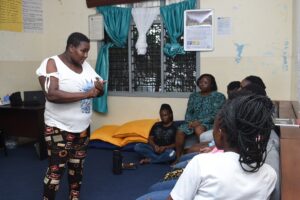
The Okoa Mama na Mtoto initiative, also known as OMMI, is a 3 year Gates Funded collaborative effort in Kenya aimed at accelerating the reduction of maternal and newborn deaths. It focuses on advocating for improved quality of maternal and newborn care, increased domestic funding for maternal, newborn, and child health and nutrition efforts (MNCH + N), and advocating for policies that protect the health of women and children.

Donor

Background

Despite notable progress in increasing coverage and access to maternal and newborn health initiatives, Kenya remains significantly off track to meet the Sustainable Development Goals (SDG) target of 70 maternal deaths per 100,000 live births and 12 neonatal deaths per 1,000 live births by 2030. Many of the solutions needed to accelerate progress are well known by local experts. There is a need for coordinated action so that priorities are translated into national and sub-national plans and budgets, that committed funds flow through the system and that community-led accountability efforts feed into decision-making.

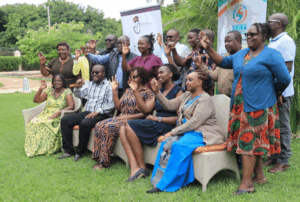
Under the leadership of the International Centre for Reproductive Health Kenya, the Okoa Mama na Mtoto – Maternal and Newborn Survival – Initiative (OMMI) brings together a host of partners to fast-track progress towards the maternal and newborn SDGs in Kenya. Partners include Options Consultancy Services (Options), Ushiriki Wema, KOGs, KMTC, Lwala Community Alliance, County Youth RH Networks, Shina Foundation, Fountain of Hope, FANIKISHA, Ollwi/Touch a Life, WPWD and Wanahabari.

Working at the national and sub-national level in priority geographies, OMMI aims to achieve the following by 2027:

  • Increased adoption of policies that enable scaling for MNCH best buys
  • Increased quantity and quality of domestic funding for maternal, newborn and child health (MNCH)
  • Improved execution of policies prioritising MNCH

Stories and News

Alcohol Study (2011 -2014)

International Centre for Reproductive Health -Kenya (ICRHK), in partnership with FHI, is implementing an alcohol harm reduction intervention study among female sex workers in Mombasa, Kenya. With funding from the Public Health Evaluation (PHE) component of PEPFAR, the study

Read More »
The Transitions Study (2015 -2018)

International Centre for Reproductive Health -Kenya (ICRHK),  is implementing a multi-country observational and mathematical modeling study on estimating female sex workers’ early HIV risk and its implications for HIV epidemic control. With funding from the Canadian Institute of Health

Read More »
Point-of-care CD4 (2014)

Through funding from Saving Lives at Birth  Grand Challenges for Development (USAID, Bill & Melinda Gates Foundation, Canada Grand Challenges, UKAID, and the Norwegian Government), International Centre for Reproductive Health -Kenya is conducting a study on the performance of

Read More »
Female Condom study (2006 -2007)

ICRHK, in partnership with the National AIDS and STI Control Programme (NASCOP), Family Health International (IMPACT), and Program for Appropriate Technology in Health (PATH), is conducting a study in Mombasa County to assess the effectiveness and cost-effectiveness of the

Read More »
IPM Vaginal Ring Study 2007- 2008

Partnership for Microbicides (IPM), conducts a safety and acceptability study of a vaginal ring as a microbicide delivery method for HIV prevention in women. The study is implemented across multiple sites in Kenya, South Africa, and Tanzania. It assesses

Read More »
PASER-M Study (2007 – 2009)

ICRHK, in collaboration with the PASER networks, PharmAccess Foundation, the Department of Global Health at the Academic Medical Centre of the University of Amsterdam, and the Amsterdam Institute for Global Health and Development, implements the PASER-M study with funding

Read More »
MSWs Project 2006 – 2008

International Centre for Reproductive Health – Kenya (ICRHK), in partnership with Ghent University and the Belgium Horizons Program, implements the MSW Project in Mombasa with funding from the Population Council. The project combines both an intervention and a research

Read More »